
Entrance into 710K: the conservatory at the Biological Sciences Greenhouse

Sarracenia is a genus of carnivorous plants indigenous to the eastern seaboard of the United States, Texas, the Great Lakes area and southeastern Canada.

Welwitschia is an ancient dry climate gymnosperm. It is a monotypic genus: the only known species is Welwitschia mirabilis.

Echinocactus or Barrel Cactus is a small genus of cacti that includes five accepted species that are indigenous to the Southwestern United States and Mexico.

Aeschynanthus is a genus of about 150 species of evergreen subtropical and tropical plants in the family Gesneriaceae. The common name of the one shown is the lipstick plant.

The Paraná pine (Araucaria angustifolia) is a critically endangered, large evergreen conifer native to southern Brazil, Argentina, and Paraguay.

The Calamondin Orange Tree, sometimes known as Calamansi or Miniature Orange, also produces edible fruit. It is a cross between mandarin orange and kumquat, and it is originally from China.

Cacti in the greenhouse
From the inside: Exploring the spaces that inspire Arts and Sciences faculty and staff
This series takes a closer look at spaces within the College of Arts and Sciences through the eyes of the people who know it best — our faculty and staff. It is through their stories we learn how these spaces inspire, spark creativity, foster reflection, and remind them of why they’re proud to be part of the College of Arts and Sciences.
More than 700 unique species of plants, each with its own story and history — some even predating primates — flourish on top of a south campus parking garage on 12th Avenue. This secret garden left me reflecting on the beautiful and quiet power of nature and its enduring connection to humanity. On a hot afternoon in June, I took a special tour of the facility with Susan Cole, chair of the Department of Molecular Genetics, and greenhouse staff Emily Yoders-Horn and David Snodgrass.
The Biological Sciences Greenhouse serves a unique role as one of the few academic facilities in the country that maintains small plant collections capable of supporting the repopulation of endangered species worldwide. It also functions as a teaching and creative space, bringing together university students, researchers and members of the Columbus community.
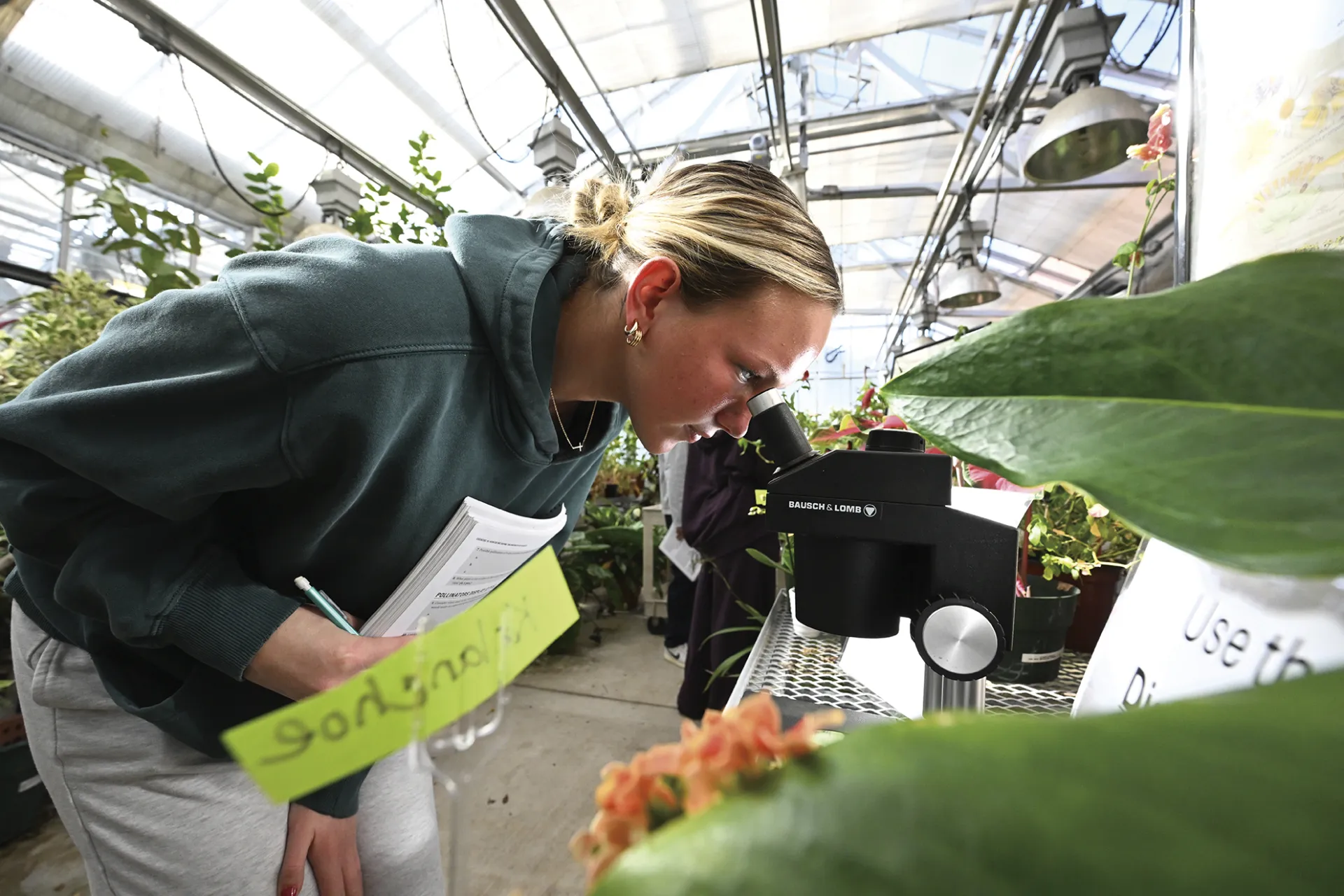
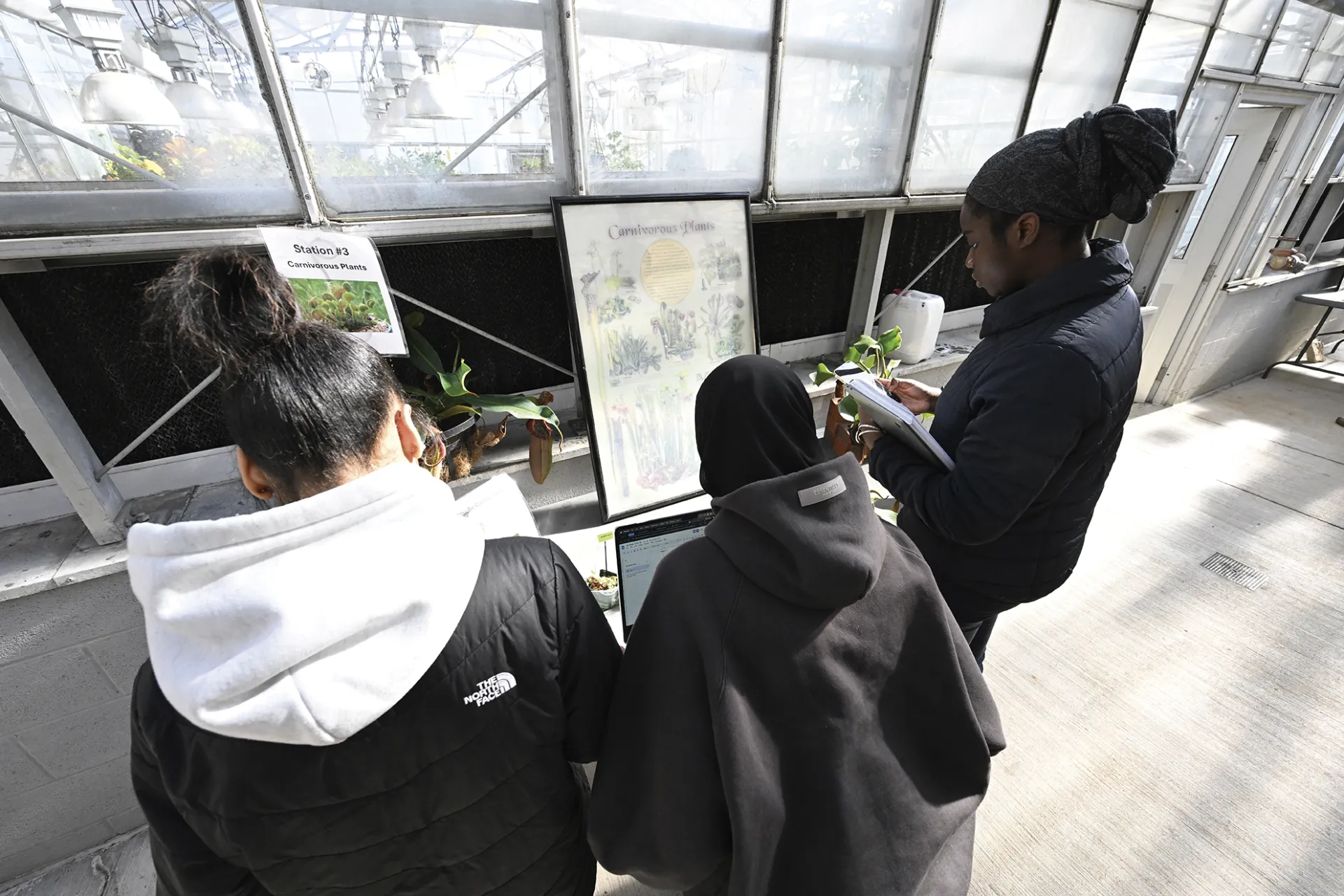
Preschool and elementary-age children marvel at plants they’ve never seen before while learning in the free and curious way that young children can. Ohio State students studying biology come to the greenhouse to learn more about flower and plant anatomy and plant evolution. Students of East Asian literature studying the cultural and material properties of tea visit the greenhouse to observe the very plants from which tea is derived. Meanwhile, art and creative writing students find inspiration for their drawings, paintings, photographs and stories amid the calm and quiet greenery. Even medicine and pharmacy students come to the greenhouse to escape the rigors of their coursework, finding a space where they can enjoy the serene atmosphere and reflect.
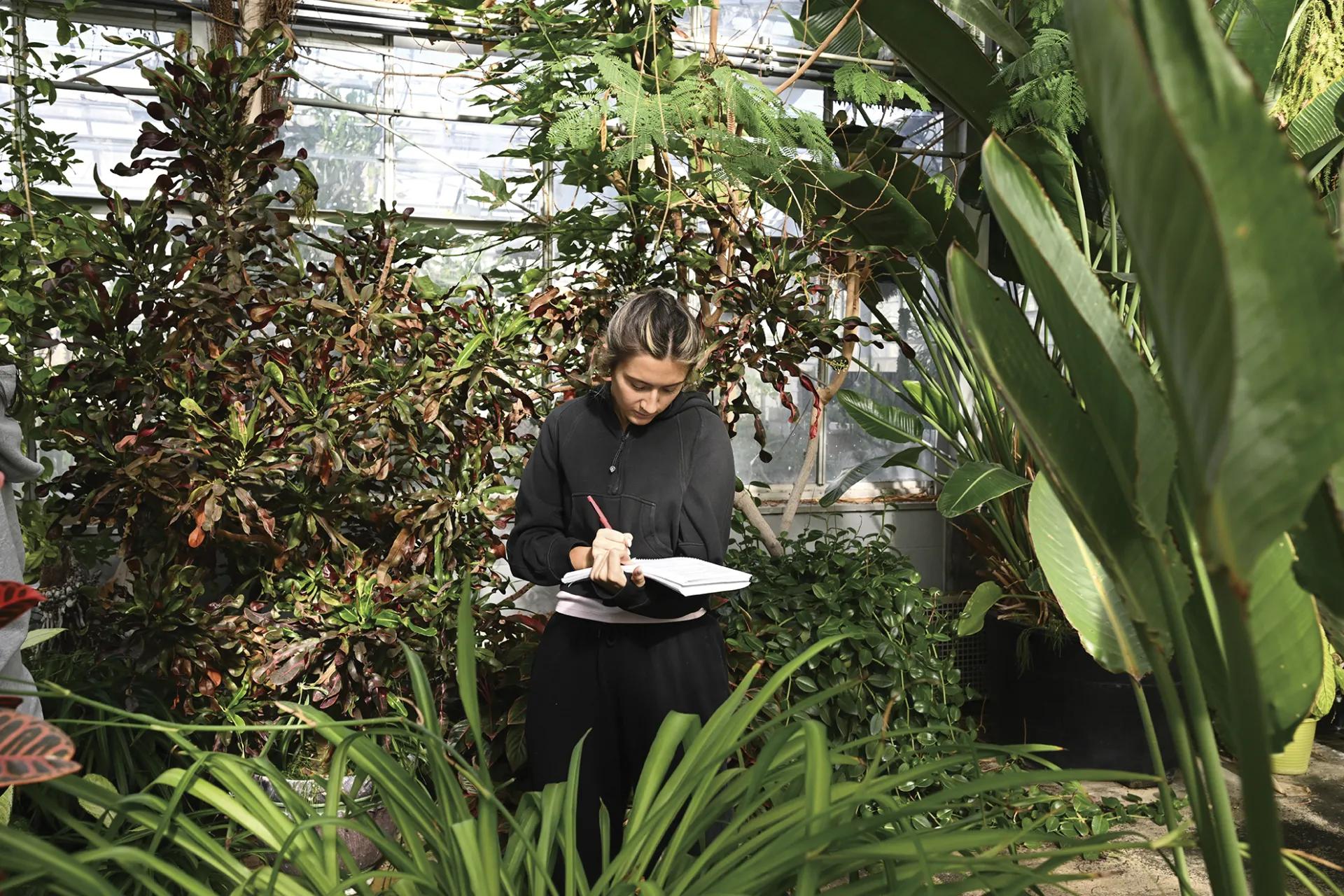
This lush sanctuary contains an incredible collection of plants. Some are recognizable, such as agave and intriguing cacti, mostly native to North America, but others are more peculiar, such as the Titan Arum. The Welwitschia has long, droopy leaves that resemble worn but strong strips of green fabric, cascading across the greenhouse floor. Revered as a living fossil, this remarkable plant — native only to the coastal Namib Desert in Africa — is known for its extraordinary lifespan, with some living for over 2,000 years.
As I walked through the greenhouse, thinking about the relationship between time and living things on the planet, David brought me over to closely examine a 260-million-year-old species of plant, the cycad. This otherworldly-looking plant — with bright-green leaves that resemble the spiky bristles of a hairbrush and a deep-brown textured trunk that grows in a segmented pattern — is one of the very first terrestrial plants as well as one of the most prevalent species on the planet. A terrestrial plant is a plant that grows on, in or from land. During the rise of civilizations, when incredible historical moments took shape and global industries and technologies emerged, the cycad was always there, slowly growing and thriving quietly in the background.
Like most College of Arts and Sciences facilities on campus, the Biological Sciences Greenhouse is more than just a space for scientific inquiry; it’s a beautiful living narrative of our planet’s history and a bridge between humanity and nature. If these plants could talk, I wonder what lessons they would share about resiliency and what quiet wisdom they would offer about helping one another thrive in the spaces we inhabit.
Photos: Gottesman Photography