The Beat Goes On: School of Music’s hip hop minor kicks off its first semester


Hip hop began more than 50 years ago in the neighborhoods of New York City and has since spread across America, crossed oceans, connected cultures and even inspired new genres of music. Now, hip hop has made its way into higher education classrooms, proving the genre is an important area worthy of academic study.
DJ Kool Herc, Grandmaster Flash and The Sugarhill Gang are among the pioneering figures credited with inspiring generations of Hip Hop artists and shaping a cultural and musical movement. The School of Music at The Ohio State University has introduced a minor in hip hop studies starting fall 2026 and hopes to influence the next generation of artists and DJs that will make their own mark on the culture.
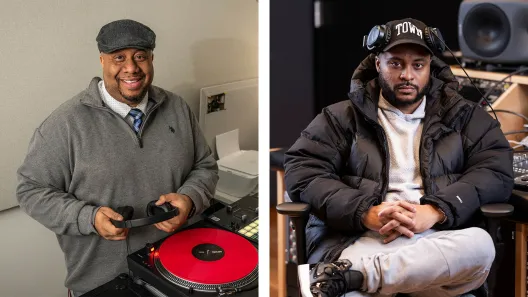
The minor comes after years of planning and direction by assistant professors Jason Rawls, Stevie Johnson and many others.
"The hip hop minor itself is truly exciting, but what Jason Rawls, Stevie Johnson and Lecturer of Hip Hop DJ O Sharp are building reaches well beyond the new curriculum alone. They are shaping the culture of the School of Music, bringing real breadth to what we teach and to who we are,” said Michael Ibrahim, the director of the School of Music. “They are opening new pathways into the school for students who may never have pictured themselves here.”
Johnson specifically can identify with the latter part of Ibrahim’s statement.
Johnson received his undergraduate degree in health and exercise science at the University of Oklahoma but taught himself how to create beats in his dorm room. When working on a curriculum and plan for the new minor, Johnson said he and Rawls reflected on their time as students, when hip hop wasn’t thought of in an academic context.
“Nineteen-year-old Stevie was very introverted and didn’t have these classes or mentors,” Johnson reflected on his undergraduate career. “I am grateful for the trajectory and success of my career, but I also wonder what it would have looked like if I had certain things in place and opportunities to publish or perform.”
The ability to learn hip hop and create beats is just the beginning of what the minor has to offer. Students are required to take MUSIC 3450: “The Art and Politics of Hip Hop,” in addition to MUSIC 3354: “Hip Hop Sampling and Beat Making.” In order to complete the minor, students must complete 15 credit hours across five courses, including three electives.
In The Art and Politics of Hip Hop, also described as the program’s flagship course by Rawls, students will learn the four main elements of hip hop; DJing, graffiti, break-dancing and emceeing. All of these elements were at the core of hip hop culture when it began in New York City and continue to be pillars today.
“We focus on teaching students about these elements and why they're important and why they shouldn't be forgotten,” Rawls said. “Nowadays, people only think about the music part of hip hop, and that's a very important part, don't get me wrong, but there are other facets to the culture. That's what we make sure students are aware of and what they learn.”
Rawls acknowledged that graffiti is illegal and he is not encouraging students to participate in it. Rather, he wants them to look at graffiti with an artistic lens and how that artwork visually framed the genre and impacted hip hop’s focus on creative and personal expression.
“What we stress and what we talk about in that course is the appreciation and understanding of why people did it and continue to do it,” he said.
In Johnson’s Hip Hop Sampling and Beat Making class, students don’t even report to a classroom on the first day. Instead, he takes them to a record store.
“A lot of these students have never been in a record store, let alone touched vinyl,” Johnson said. “They don't know what it means to get an idea of what the music would sound like based on the artwork or looking at the liner notes. They have a rhythm roulette challenge where they pick three records, and they have to make a beat out of the records that they chose.”
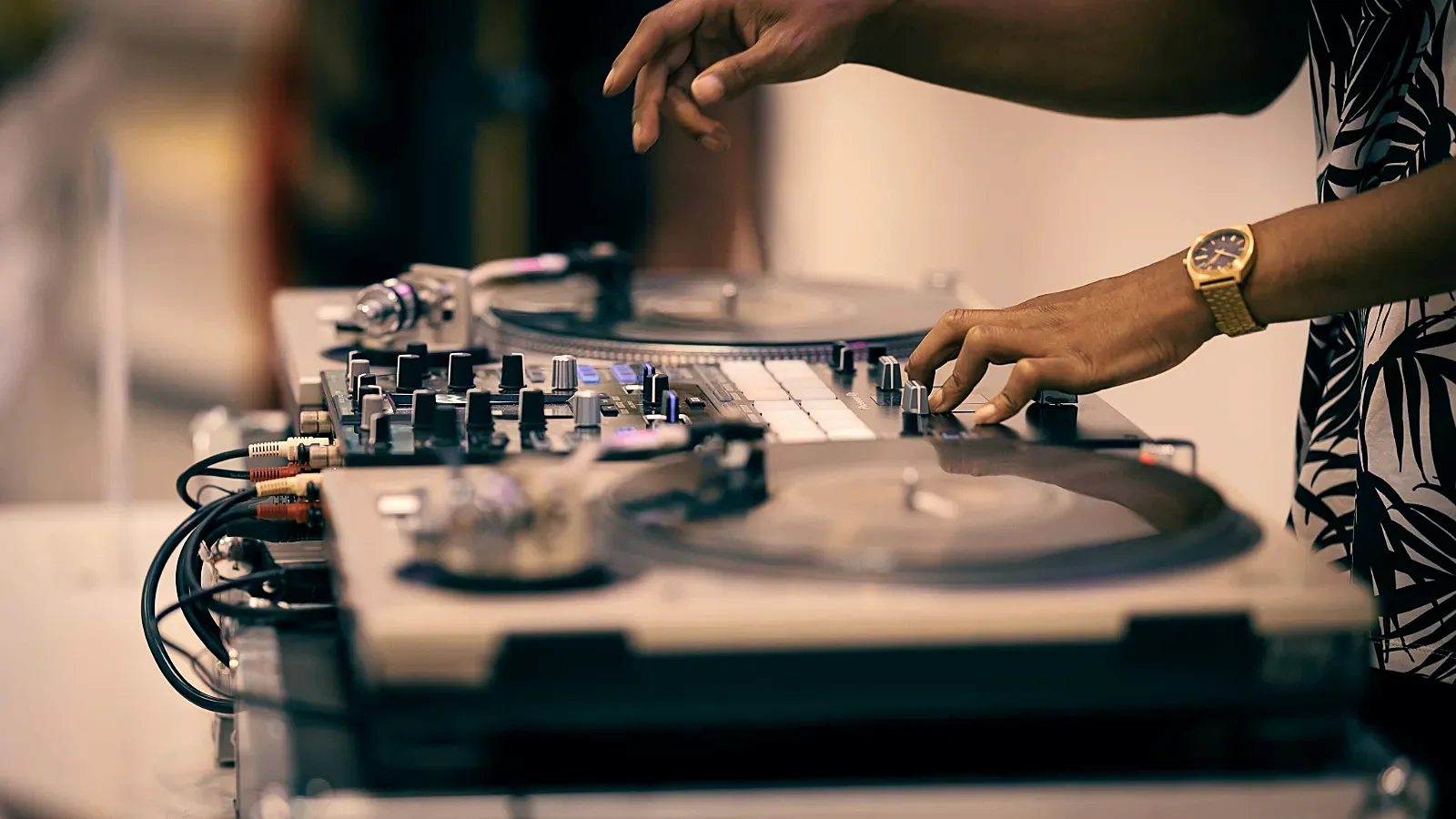
Even if a student isn’t a music major or doesn’t plan on exploring working as a DJ, Johnson said the hip hop studies minor teaches students many skills that can be applied to any career path. He explains that in a 30-40 second span, a DJ will be tasked with playing a record, listening to his next mix in his headphones, while also carrying on a conversation with a patron discussing the music being played. Being able to multi-task at that level and be successful in doing so builds a skill set that is transferrable to many walks of life.
“The ability to have to make important decisions at an incredibly rapid rate is something that people won’t see on the surface of a DJ or their booth,” he said. “It is something that is taking place as our students are learning to perform and make decisions on the fly.”
For Rawls and Johnson, the hip hop studies minor is about more than just music. It is about creating a space for students to create beats, discover new career paths and learn about the culture that surrounds hip hop while also developing skills that will serve them in their postgraduate careers.
“They are opening creative and professional doors for students past their graduation,” Ibrahim said of the school’s hip hop faculty. “Students rave about their classes, and the deeper story is in the ripple effect, felt outside our building, off campus, and across the music and hip hop communities at large."